Bike Tour of Cleveland

So this post is a little different than anything I’ve posted so far, but now that I’m back in Ohio my adventures have not ended! Last weekend my dad and I went on a bike tour of Cleveland with Bob’s Bike Tours. Special shout out to Melissa Zapata who actually told me about the LivingSocial deal for the tour.

Bob offers three different tours: Best Location in the Nation, Moses Cleveland, and the Historic Neighborhood tour. Best Location in the Nation is basically the highlights of Cleveland for those who are not from around here. Moses Cleveland is focused downtown, shorter and an easier bike ride than the other options.

Photo source: http://ech.case.edu/ech-cgi/article.pl?id=CM

If you are from the area, I would recommend the Historic Neighborhood tour. We saw the highlights, but also learned some new interesting facts about our city and saw some more unique things off the beaten path.

The bike tours all meet across from Progressive Field, formerly Jacob’s Field, home to the Cleveland Indians. Bikes, helmets, and water are all provided. Also the bikes have a very small Velcro pouch in between the handlebars so you can put your keys, wallet, or camera inside.

Off we went on our bike tour, but we didn’t go very far before we stopped. Bob pointed out a special bench behind the Q. The bench has colorful food all around it, but if you didn’t know it was there you would certainly miss it. The bench commemorates the Central Market that was located on the land that is now occupied by the Q and Progressive field. I had no idea this market existed. I just love learning new things about Cleveland!

We biked on through East 4th (where Pickwick and Frolic, House of Blues, and the Corner Alley are located, among many others!) and stopped in the Arcade for a minute. We continued on to a parking deck next to City Hall, Willard Park and the Free Stamp. This parking deck provided some great views of the Cleveland Brown’s Stadium, the Great Lakes Science Center, and the Rock and Roll Hall of Fame. We paid a visit to Public Square before leaving the East Side and saw the Soldiers and Sailors Monument.

Photo source: http://allthingsclevelandohio.blogspot.com/2007/12/cleveland-city-of-bridges.html

Crossing the Veteran’s Memorial Bridge (aka the Detroit Superior Bridge) was the most challenging part of the bike ride. So don’t worry, the bike ride was not exhausting. We toured around Ohio City (obviously stopped to see West Side Market and Great Lakes Brewery!) and Tremont and then went back across the Hope Memorial Bridge. I love the Guardians of Traffic on this bridge. I think they are such a unique feature to Cleveland.

Overall, I really enjoyed the bike tour and learned a lot of new facts about Cleveland. I would recommend the tour for locals as an enjoyable way to spend a beautiful day or if you have out of town friends or family visit it is a great way to see all the highlights of Cleveland.

Check out Bob’s website here to book your own tour: www.bobsbiketours.com

And here’s an article I found with lots more information about many of the “icons” I named in my post: Cleveland Magazine – Iconic Cleveland

P.S. My summary of the tour left out some details, so if you decide to do the tour there will still be surprises for you! All along the tour Bob was sharing information and I was always learning new little tidbits about the highlights of Cleveland.
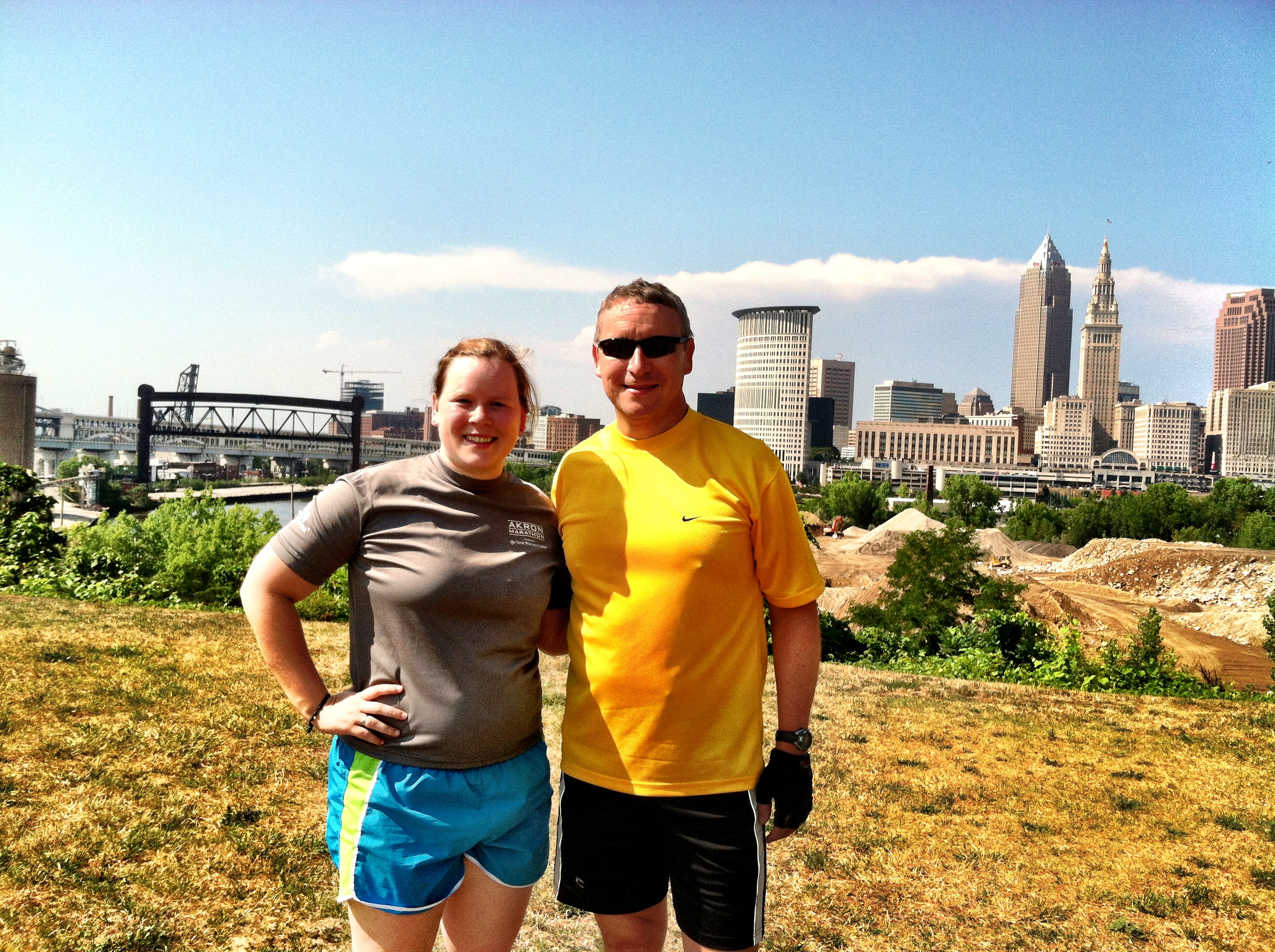
We were a little sweaty by the end of the tour!

Back Home

I arrived back in the States last Tuesday and then drove back to Ohio on the 4th of July. I can’t believe it’s already been nearly a week since leaving Lebanon! I’ve got lots more blog posts ideas and things planned to share on my website so please keep checking in. Right now studying for the GRE is consuming a lot of my life. I will be taking the test the first week of August. In the mean time, I am always preparing for speaking engagements and presentations about my trip as part of my fellowship. Please email me (kisthardtl@gmail.com) if you would like me to give a presentation!

ANERA

One night we met with Bill Corcoran, the President for America Near East Refugee Aid (ANERA) over an American dinner of hotdogs in the hotel. Funny note about these hotdogs – they had corn on them!

ANERA was founded in 1967 in order to give a positive face for humanitarian aid. ANERA simply does aid, no advocacy or political involvement. ANERA works in Lebanon, Jordan and Palestine and has projects related to healthcare, education, and economic development. It was a surprise to us when Bill said that there are probably only about 250,000 Palestinian refugees in Lebanon. Most figures we had quoted to us were almost double this number. He said that 450,000 is the figured used by the UN, but there is very little information to back this up. According to Bill, many other NGO’s have done headcounts and estimates which indicate the figure to be closer to 250,000.

The average Palestinian refugee family has six children. With poor living conditions, I asked Bill if there were any family planning programs in the camps. He said there are not and they probably would not be very effective because the Palestinians see their children as their legacy and their social security. I was surprised to learn that particularly in the Occupied Territories of Palestine, they see their large families as their way to beat the Israelis in the long run who only have around two children per family.

Over 50% of the youth drop out of high school and there is over 50% unemployment in the camps. Most people live on less than $6 per day.

One group member has been focused on brain drain during the trip and asked if this is an issue that impacts the Palestinians. Bill shared a surprising insight: if a Palestinian manages to break through all the barriers and gain a college education and then takes a job somewhere else (usually in the Gulf), Bill still sees this as a positive because of the individual success and also because generally they send a large amount of money back to their family in the camps which is a major positive.

The Palestinian refugee issue has been going on for over 60 years and is the longest standing refugee issue in the world, as well as the most religiously charged issue. An example of the frustrations felt by Bill in his position, in November 2008 he was asked to dedicate a wing of a new hospital that had been paid for primarily with money from the US. The frustration is that less than two months after the dedication ceremony, the hospital was completely destroyed by the Israeli army which is US funded. So essentially, US money built the hospital and US money destroyed the hospital. This is an example of the United States’ contradictory policy in the region.

We asked Bill what message he would like us to bring back to the US for our friends and family and he asked that we share the idea that blindly throwing ourselves behind everything that Israel does is not the same as supporting Israel, meaning that we can be more critical certain Israeli actions and decisions while still supporting the country as whole. It’s also important to note that US foreign aid is supposed to help end poverty, but Israel is the largest recipient of US foreign aid and has an incredibly high GDP. I agree with Bill’s insinuated comment that Israel does not need our aid. Unfortunately, it comes down to the US having an ally in the region and we are essentially paying Israel to remain our ally. To further complicate the situation, I think recent conflicts have shown that Israel is much more of a fair weather friend than the US likes to admit. Israel has indicated recently that they will do what they believe to be best for them, rather than simply do what the US wants them to do.

Hope you enjoyed a longer and more informational post! Here’s the website for ANERA if you’d like more information: http://www.anera.org/


Visit to the US Embassy in Beirut

It was a real treat to visit the US embassy in Beirut. Security to get into the Embassy was very intense. We waited around for everyone to go through individually. Getting our whole group through security took almost as long as our meeting with the State department employees. I was lucky to be one of the first through security because once we were through there was an informal conversation with two relatively new Foreign Service Officers. One of them was from Ohio and did the Peace Corps! They were very open with us about their process to the State department. A helpful tip they gave us for the Foreign Service Officer Test (FSOT) was to make sure to know the US Constitutional Amendments, as well as extensive as possible background in History. I was surprised to learn that one woman had only studied French before her appointment to Lebanon and was not required to study Arabic at all. One of the new employees had gotten their Masters in Public Policy. This was helpful to learn since I have been looking at Masters Programs.

Four main goals for the US Embassy in Beirut were outlined for us:

  1. Push back against Hezbollah – because the United States has designated Hezbollah a terrorist organization the Embassy is essential in the region.
  2. Fight counter-terrorism
  3. Aid in the Middle East Peace Process
  4. Help US Citizens in the country

Overall, the visit to the US Embassy was very informative and I really enjoyed it. We learned that the employees at the Embassy are not allowed to leave the Embassy whenever they want. They need to schedule their movements a few days in advance and be outside the Embassy for a maximum of six hours two times per week. Also they theoretically can’t have predictable movements, like going to the same bar every week, but in practice this might not always be true. It is certainly an interesting lifestyle! Unfortunately we weren’t allowed to bring our cameras into the Embassy so I don’t have any photos (the photo is from the bus on one of our many drives around Beirut). Here’s their website if you’d like more information: http://lebanon.usembassy.gov/

Music in Lebanon

The very first night in Beirut we went to a music festival in Achrafieh. Najwa Karam was singing at the festival. I had never heard of her before, but one of the members of our group had several of her CD’s. At the mall a few days later, I actually bought one of her CD’s. My roommate and I have listened to it several nights! The best part of the music festival was all of the people dancing and singing along to Najwa. Another group member blogged and pointed out something that I found very interesting. Generally when Americans think of a large group of people gathering in the streets in the Middle East, the Western mentality automatically assumes it is a riot or a protest. However, this was a large gathering of happy people dancing and singing in the streets, which served as a great contrast to the media portrayal of the Middle East.

The other night we went to the Music Hall. At the Music Hall we saw numerous performances. Each group only performed 3 or 4 songs and then there was also music in between. The music in between was generally American top 40 hits. The performed songs varied from traditional Arabic to Spanish Salsa to American rock and roll. All of the performers were incredible and I would have enjoyed listening to any one of them the whole time. It was a big surprise to sing along to a performance of The Village People’s “YMCA” and Aerosmith’s “Dream On” in a Music Hall in Beirut.

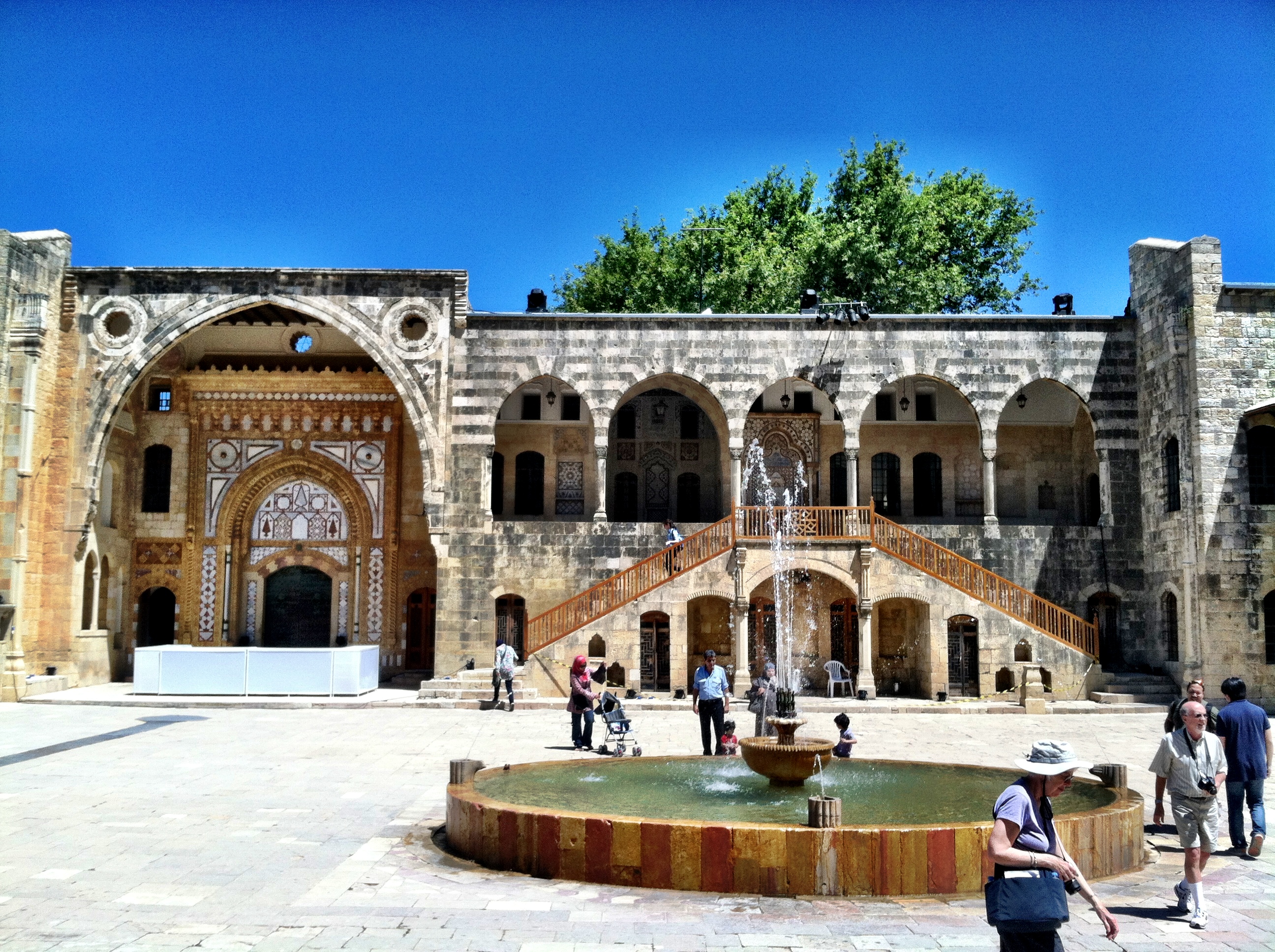
Another night we went to see Caracalla perform. Caracalla is an international dance group that is a unique blend of Western and Oriental dance styles. The best part about the show was that it was performed at Beitedine, a historical palace that we toured earlier in the day. A live orchestra performed all the music for the show and it was incredibly well done. There were about four parts to the show and only the final act had singing along with the orchestra. The singing was breathtaking! Some other group members were able to get photos on their fancy cameras, so hopefully I can share those with everyone soon.

Finally, last night we went to Skybar. Skybar is one of the top clubs in Beirut. Usually you need a reservation nearly a month in advance to get in, but our generous hosts (The Lebanon Renaissance Foundation) got us a reservation! The club was a ton of fun and way more exciting than any bar I’ve ever been to before anywhere in the world. I was surprised that the music at Skybar was basically the same as what you would hear in a US club, lots of Top 40 hits from America with a few Spanish songs mixed in.

Just Checking In

Today was another busy and exciting day in Lebanon. Lucky for all of you (my blog readers) we had some long car rides which I brought my laptop on and wrote several blog posts! I’ll post more details later, but we spent the day in the south of Lebanon. At one time we were mere feet away from the border with Israel. We got pictures with UNIFIL (United Nations International Forces in Lebanon). They were all very nice and eager to take photos with us. The one gentleman I have a photo with actually had his own camera with him and had the girl who was taking our photo take one on his camera as well.

Photo 1: Israel in the background. Photo 2: with the UNIFIL officer (yes he’s from Indonesia!). Photo 3: with the UN tank.

Tour of Byblos

After a Parliament meeting in the morning, we had a jam packed day ahead of touring a grotto and the city of Byblos.

“Jeita Grotto was discovered in 1836 by an American missionary. Drop by drop of water molds a stalactite on the ceiling and floor of the galleries and halls. Jeita Grotto is characterized by its unique dazzling beauty and the most varied shapes, sizes, and colored stones.” (From the entrance pamphlet)

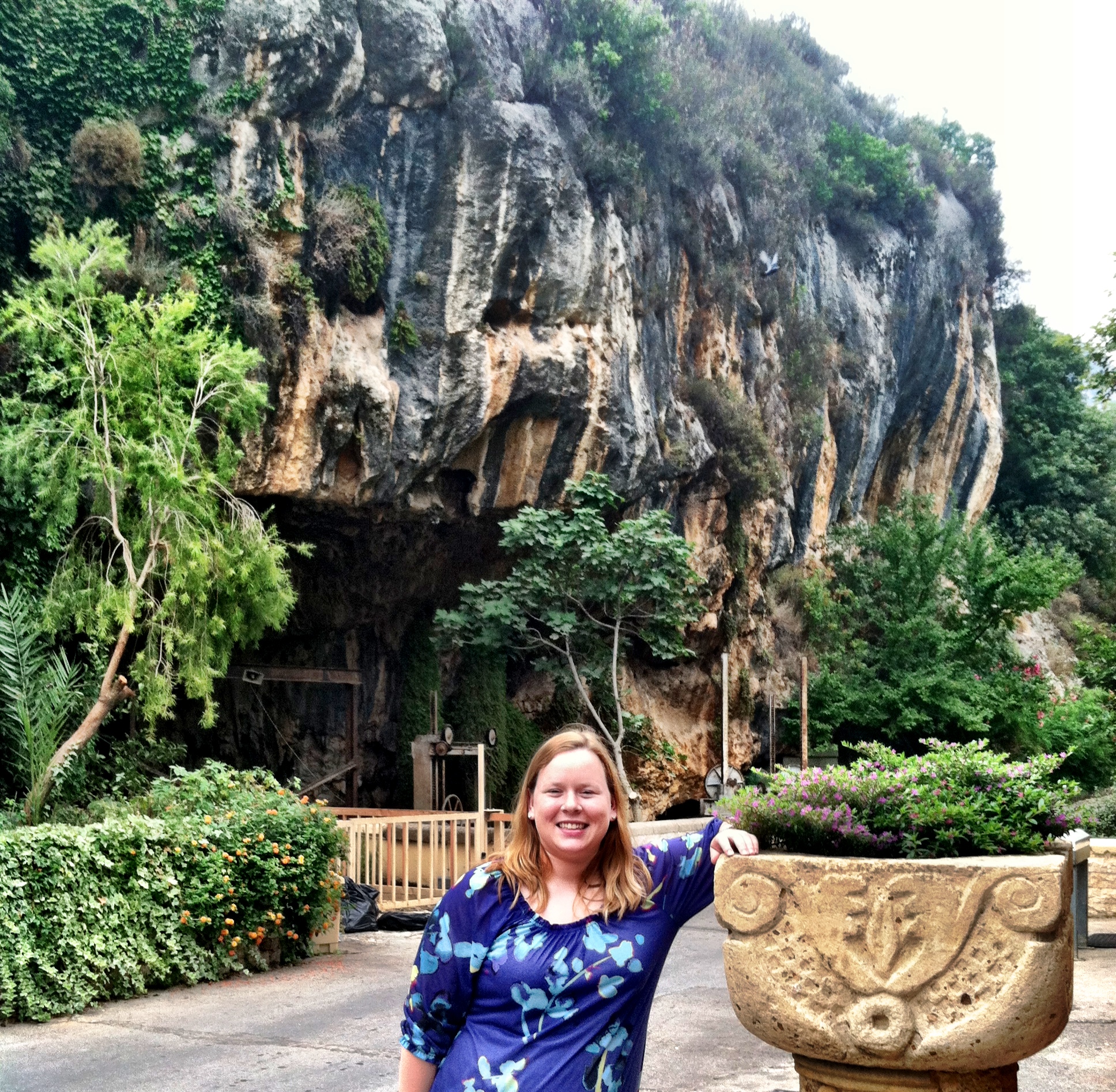
We arrived and rode on a gondola up the mountain to the upper part of the grotto. We walked on foot through the upper grotto. I was amazed by the height of the stones. The beauty was truly breathtaking. Also there were several times where I was very dizzy looking down at the steep drops in a dimly lit cave with a wet floor and small path! After walking through the upper grotto we stopped at a gift shop which had some of the best deals in all of Lebanon. I kid you not! I picked up two sets of worry beads, several postcards (since photography was not allowed in the caves) and a eye of Fatima bracelet for $9. We proceeded on the tour on a mini train to the lower part of the grotto. At this point we went in a boat for a tour of the caves by water. This was incredible! I would highly recommend Jeita Grotto for any traveler to Lebanon.

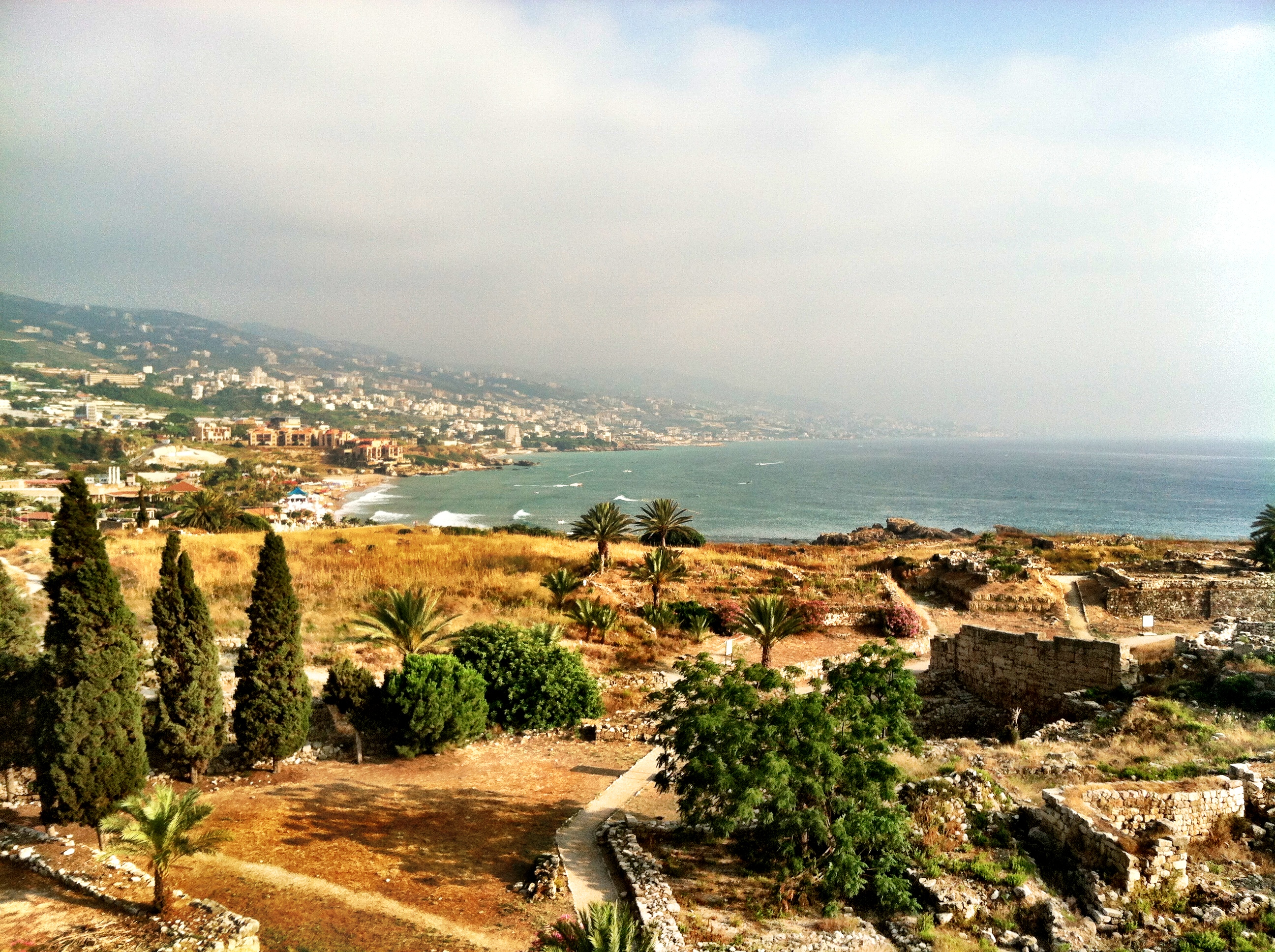
After the grotto, we stopped for lunch and then proceeded full speed ahead to Byblos. We met up with our tour guide in Byblos and he was HILARIOUS! His name was Yazid and he gave us a great history of the area, as well as a full supply of laughs. We walked around the ruins and he showed us the spot where his grandfather’s house used to be, right above the ruins. The highlight of the tour was climbing into a tomb of an Ancient Egyptian sarcophagus. After admiring the history, we did some more shopping. I got a hand of Fatima to hang on the wall. They are symbols of good luck and we’ve seen them at all the gift shops. We stopped for some drinks before dinner which was nice because it was super hot. Then we ate a delicious meal at Pepe Abed. If you are ever in Byblos, you must go to this restaurant! It has so much history, it even has it’s own museum. We had delicious food including calamari and fish (with the heads still on!).

Overall, this was an AMAZING day, as nearly every other day has been on this incredible journey! I am so thankful for this opportunity and for all those who have supported me. Peace and blessings!

Parliament Meeting

This morning we met with Simon Abi Ramia, a member of Parliament who is the head of the commission for Youth and Sports. As always, this was a very interesting meeting. Abi Ramia worked in France for 23 years and returned to Lebanon about six years ago. He is a member of the Free Patriotic Movement party. I was very surprised when he immediately stated that the source of Lebanon’s problems are their neighbors, Syria and Israel. Blaming others is an issue that we have focused on among the students in the fellowship. Placing the blame on other groups for problems within Lebanon is common, but creates a much larger issue because it avoids the reality of the situation and the real actors.

Abi Ramia informed us that his goal and the goal of the parliament is to make laws and examine the work of the government. He said that he is not directly involved with the people, in the sense of direct aid. He is very involved though in a social aspect with the people of his district. Abi Ramia shared that in the past two days he attended seven funerals and weekends are filled with weddings, baptisms, and other various celebrations. When he first came to office Abi Ramia did not want to spend time on these social things because he wanted to focus on actual policy making. However, the Lebanese society does not accept avoiding these social functions because of the importance of family and community. Therefore, Abi Ramia’s weekends and free time are filled with social events.

The budget for the Ministry of Youth and Sports is only $2-3 million in Lebanon, which Abi Ramia compared to France which he said was approximately $1 billion for the same ministry. For this reason, we can see that youth and sports are not considered one of the top ministries. However, Abi Ramia has a good argument for why Lebanon should spend more money on this ministry. He argues that sports cross sectarian lines and more youth sports groups and even adult sports groups would help unite the people on a different level than religion.

Changing the voting age from 21 to 18 was mentioned again. I’m not sure if I mentioned this on my blog before, but in one of our previous sessions we heard from someone who spoke on this issue. Abi Ramia simply stated that he supported moving the voting age to 18 and did not go into any details. However, our earlier speaker had mentioned that there had been groups trying to work with students to change the voting age, but students did NOT want to change it. The reasoning for not wanting to change the voting age to 18 was that the students are already so divided into sectarian lines and neither group wanted to unbalance the machine.

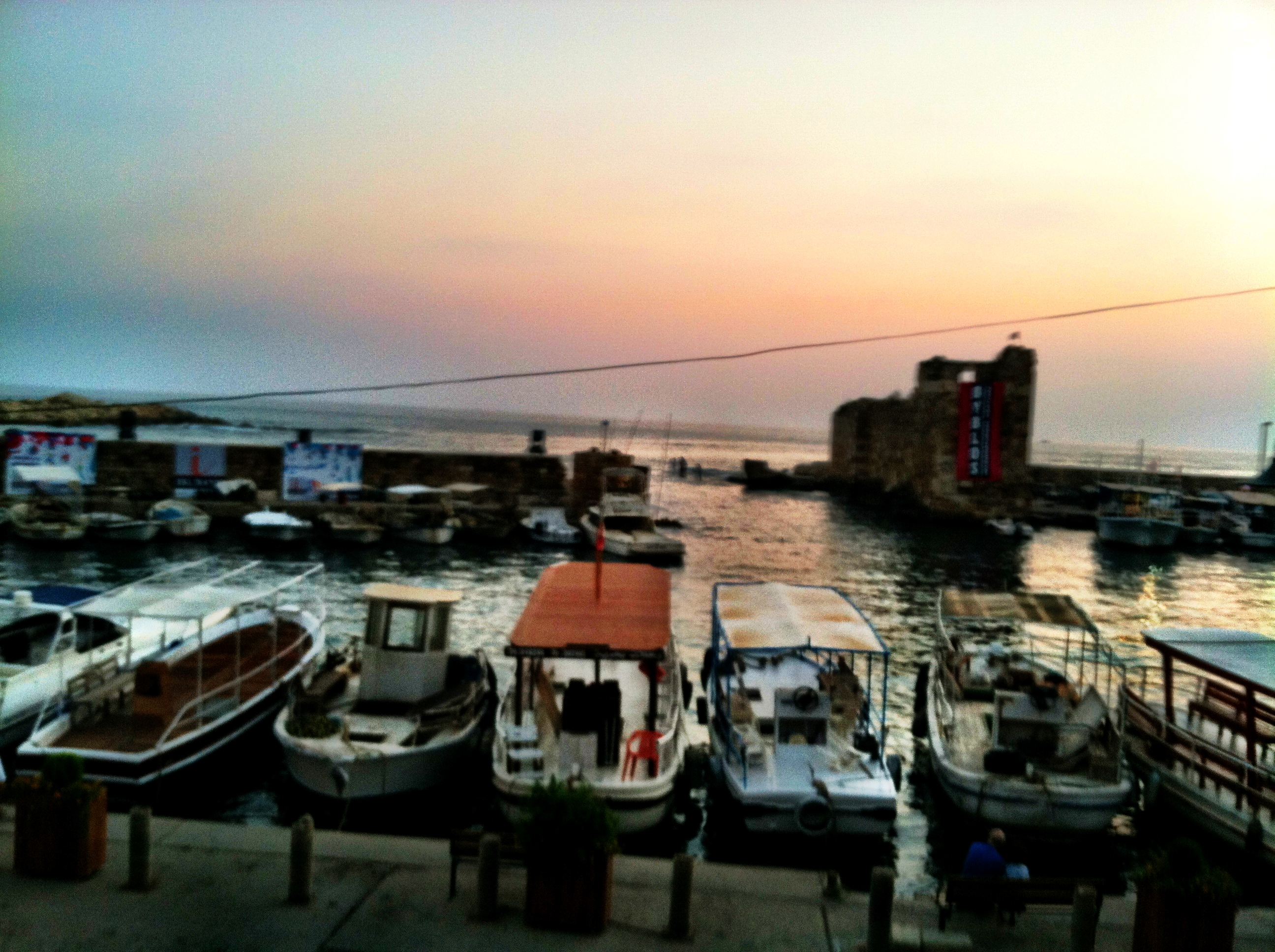
PS The photo is from sunset at the restaurant we ate dinner at, Pepe Abed.

Day 6 – More Meetings

Today we had two more meetings. I will tell you a little about each, but first I want to talk about electricity.

I haven’t mentioned electricity so far on my blog. Beirut has the appearance of a modern European city, however the infrastructure is seriously lacking. When the Israeli’s pulled out of Lebanon in 2000, they did their best to destroy as much of Lebanon’s infrastructure as possible. Some things have been repaired and redeveloped, but the electric grids have not. The issue of electricity is really coming to fruition this summer while we are here because people are unbearably hot without AC. There have been protests with people burning tires in the streets. Our very first night in Beirut we experienced two power outages while we were at dinner, each lasting less than one minute. Nearly everyday we have experienced similar power outages for short amounts of time. Anyone who is slightly well off and all restaurants and businesses all have their own generators for back up when the electricity is out. The issue of electricity shows that while Beirut is trying to become a modern European city and travel destination it still has a ways to go.

So for our two meetings today:

Our first meeting was with Youssef Fawaz, the Executive Director of a non profit called Al Majmoua, which is a micro-credit program founded by Save the Children in 1994. In 2003 Al Majmoua became financially self-sustainable and is the leading microfinance NGO in Lebanon. I really enjoyed this meeting because Al Majmoua primarily gave micro-loans to groups of women in the beginning. The loans that they give run from as low as $100 to $5000. Starting in 2001 they began giving loans to men and individuals. Al Majmoua currently has 32,000 clients with a $32 million portfolio. The average loan for a group of women is about $600 and usually goes towards hairdresser or food processing supplies. The average loan for an individual is around $1500 and for men usually goes towards woodworking or some other similar handicraft. Al Majmoua has grown to 19 offices across the country and a staff of 225. One of the issues they currently deal with is recruiting female loan officers. They must have a certain number of female loan officers so that they can go out and meet with the groups of women who are applying for loans. Although Lebanon is more liberal and progressive than many other Middle Eastern countries, it would still be unacceptable for a male loan officer to meet alone with a group of married women.

It was disappointing that Fawaz came off as very pessimistic in his hopes for the Lebanese government. He said the “country is politically bankrupt” and that it is a zero sum game trying to get anything done through the central government.

Our second meeting was at An-nahar which is the primary Arabic newspaper. It was very interesting to hear their optimism about the future of newspaper. When many say that newspaper will obviously face an end, they believe that through adapting to new conditions the newspapers can still exist. The men we spoke with shared that they future role of newspapers is more focus on analysis and less on breaking news because breaking news can easily be shared on Twitter and other online media. Our primary reason for meeting at An-nahar is a program that they have called Youth Shadow Government (YSG). This is a very cool program for youth approximately ages 20-26 to shadow the actual Lebanese government. These youth are assigned Ministers or more than one depending on what makes sense. They follow what policies these Ministers are focusing on and then develop their own individual projects that are often picked up by the Ministers and given national focus. The purpose of the YSG is to empower the youth to be active and involved in their government. The program has been very successful so far in accomplishing its goal and has had alumni of the program go on to many levels of government involvement.

A new program that has grown out of YSG is Lebanese Young Leaders for Tomorrow. The young man who was speaking with us had graduated from the YSG and is currently in the new program.

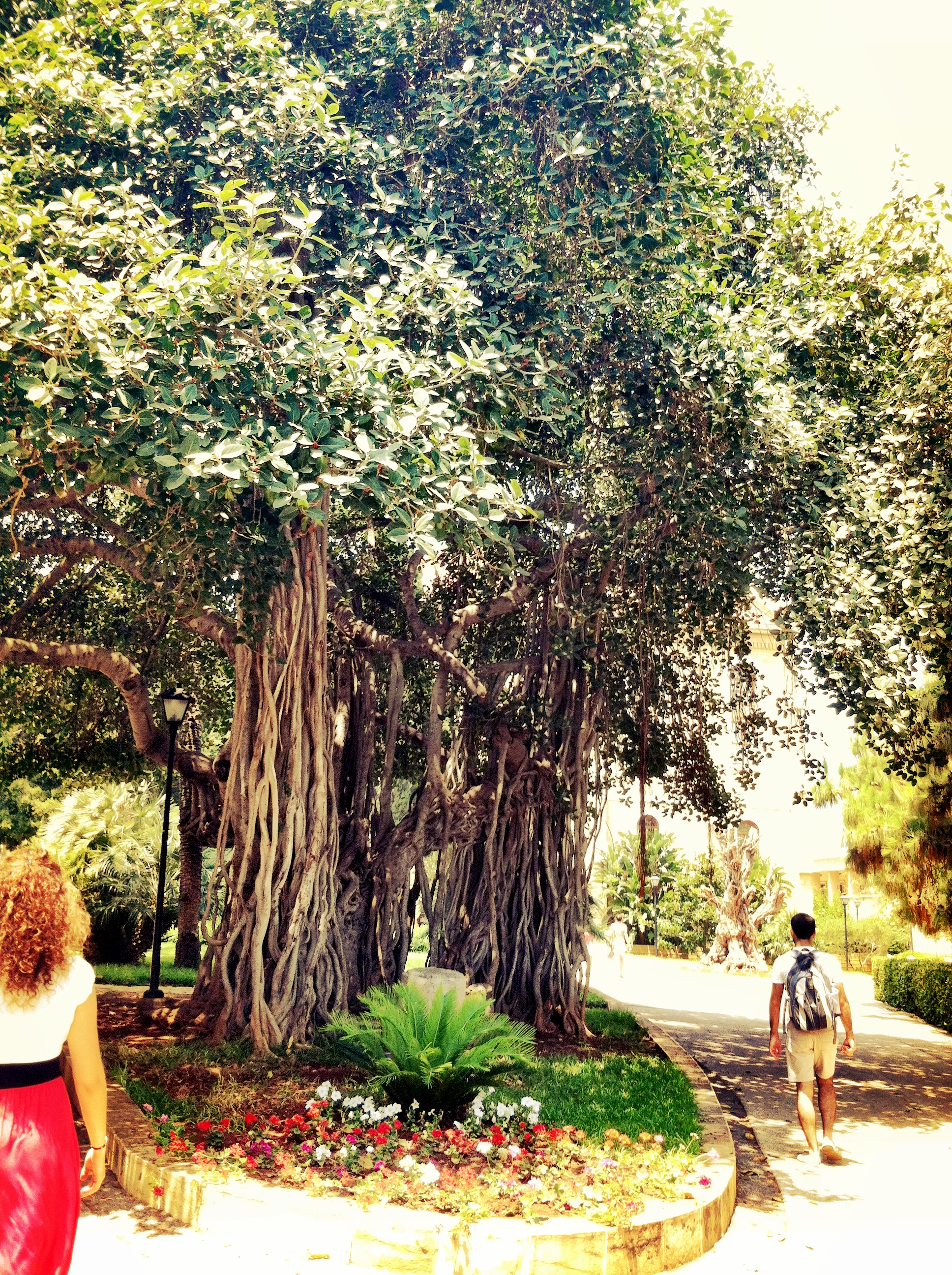
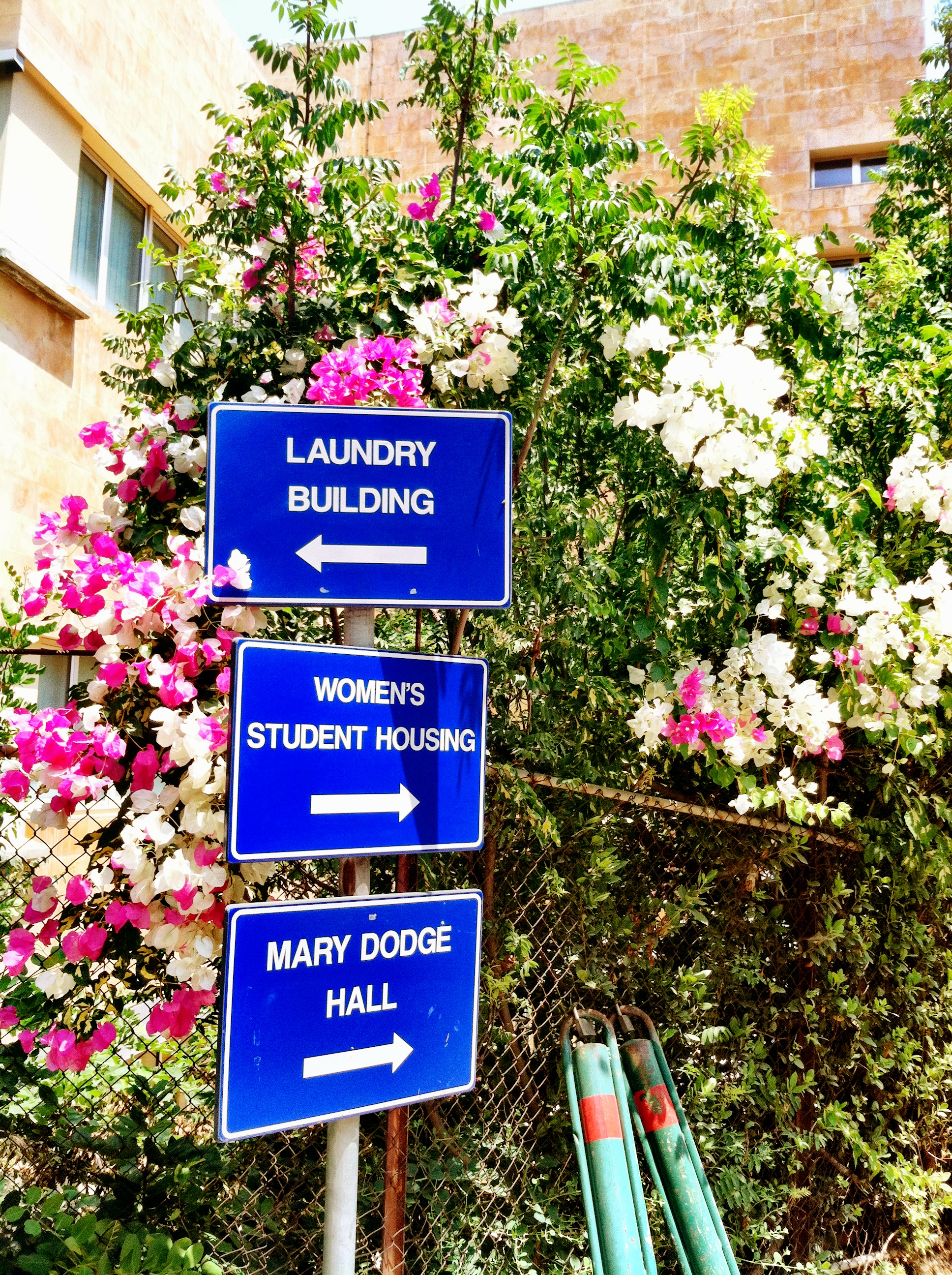
Oh in between our two meetings we had a tour of American University of Beirut’s campus. It’s very beautiful and just a minute walk from the beach. If I had longer than one year left in my undergrad I would love to study abroad there. Explanation of photos: 1. Graffiti in Beirut outside of Al-Majmoua office. 2. Me on AUB campus in front of main entrance. 3. Banyan tree on AUB Campus. 4. Pretty flowers on AUB campus. Well I think that’s enough for today! Peace and blessing 🙂

Day 4 – Our first meetings

Yesterday was our first day of meetings. We went to this super swanky office building where the Lebanon Renaissance Foundation has their offices. We met with four individuals:

  1. Michael Young who is an editor at Reason magazine and also an editor at the Daily Star. He has also written a book, which I am going to try and get when we return called “The Ghosts of Martyrs Square: An Eyewitness Account of Lebanon’s Life Struggles.”
  2. Hanin Ghaddar is the managing editor of Now Lebanon. She was very friendly and honest with her comments.
  3. Ousama Safa who is a Social Affairs officer at UN ESCWA. He also has experience with think tanks, lobbying and public policy.
  4. Lokman Slim is an activist trying to raise awareness about the collective amnesia regarding the Civil War. He co-founded Umam Documentation & Research and has helped publish several reports related to the Civil War.

All of the panelists were informative and interesting. We started off looking at the Arab Spring. One of the panelists shared that he believes there is a false sense of belief that things can happen in Lebanon as well post Arab Spring. The reality is that the Lebanese beast has multiple heads and so it is impossible to rally for one specific officials resignation or something similar because are so many issues at different levels.

The major topic on everyone’s minds right now is Syria. Syria has a very direct influence on events in Lebanon, therefore it is a question of how, not when, things might change in Lebanon.

Another topic which we discussed was the amnesia related to the Civil War. The Lebanese Civil War officially ended in 1990 with an official amnesty. It is called into question how the war ended and, more importantly, if it ended? It is surprising that a unified history book has not been decided on in Lebanon. There are three different history books depending on which region you live in. The panelists had different views regarding the issue of the textbook. Ousama believed that it was ridiculous that the country could not decide on one book and it should be remedied as soon as possible. However, Lokman, who spends a lot of time on the topic of the Civil War in his work, though that the textbook was irrelevant and advocated a curriculum based on all different perspectives. The attitude of many in Lebanon is that the war wasn’t their war, it was a “war of others.” All panelists agreed that the Lebanese need to take ownership of the war in order to truly move on.

A big issue in Lebanon is the sectarianism. All panelists agreed that the confessional system is flawed and needs revisions, however they did not all agree on what the revisions should be.

I was surprised by the panelists opinions towards the US and especially US foreign policy. One panelists commented that there is a huge vacuum left by US policy in the region. He wanted the US to show global leadership with diplomacy and use their musclepower to forced people into dialogue because the time for dialogue may be missed. With the shrinking space for dialogue and diplomacy, there is a growth of radicalism. One panelist seemed fearful that Obama would likely be stepping back from the Middle East if re-elected.