Day 6 – More Meetings

Today we had two more meetings. I will tell you a little about each, but first I want to talk about electricity.

I haven’t mentioned electricity so far on my blog. Beirut has the appearance of a modern European city, however the infrastructure is seriously lacking. When the Israeli’s pulled out of Lebanon in 2000, they did their best to destroy as much of Lebanon’s infrastructure as possible. Some things have been repaired and redeveloped, but the electric grids have not. The issue of electricity is really coming to fruition this summer while we are here because people are unbearably hot without AC. There have been protests with people burning tires in the streets. Our very first night in Beirut we experienced two power outages while we were at dinner, each lasting less than one minute. Nearly everyday we have experienced similar power outages for short amounts of time. Anyone who is slightly well off and all restaurants and businesses all have their own generators for back up when the electricity is out. The issue of electricity shows that while Beirut is trying to become a modern European city and travel destination it still has a ways to go.

So for our two meetings today:

Our first meeting was with Youssef Fawaz, the Executive Director of a non profit called Al Majmoua, which is a micro-credit program founded by Save the Children in 1994. In 2003 Al Majmoua became financially self-sustainable and is the leading microfinance NGO in Lebanon. I really enjoyed this meeting because Al Majmoua primarily gave micro-loans to groups of women in the beginning. The loans that they give run from as low as $100 to $5000. Starting in 2001 they began giving loans to men and individuals. Al Majmoua currently has 32,000 clients with a $32 million portfolio. The average loan for a group of women is about $600 and usually goes towards hairdresser or food processing supplies. The average loan for an individual is around $1500 and for men usually goes towards woodworking or some other similar handicraft. Al Majmoua has grown to 19 offices across the country and a staff of 225. One of the issues they currently deal with is recruiting female loan officers. They must have a certain number of female loan officers so that they can go out and meet with the groups of women who are applying for loans. Although Lebanon is more liberal and progressive than many other Middle Eastern countries, it would still be unacceptable for a male loan officer to meet alone with a group of married women.

It was disappointing that Fawaz came off as very pessimistic in his hopes for the Lebanese government. He said the “country is politically bankrupt” and that it is a zero sum game trying to get anything done through the central government.
Our second meeting was at An-nahar which is the primary Arabic newspaper. It was very interesting to hear their optimism about the future of newspaper. When many say that newspaper will obviously face an end, they believe that through adapting to new conditions the newspapers can still exist. The men we spoke with shared that they future role of newspapers is more focus on analysis and less on breaking news because breaking news can easily be shared on Twitter and other online media. Our primary reason for meeting at An-nahar is a program that they have called Youth Shadow Government (YSG). This is a very cool program for youth approximately ages 20-26 to shadow the actual Lebanese government. These youth are assigned Ministers or more than one depending on what makes sense. They follow what policies these Ministers are focusing on and then develop their own individual projects that are often picked up by the Ministers and given national focus. The purpose of the YSG is to empower the youth to be active and involved in their government. The program has been very successful so far in accomplishing its goal and has had alumni of the program go on to many levels of government involvement.

A new program that has grown out of YSG is Lebanese Young Leaders for Tomorrow. The young man who was speaking with us had graduated from the YSG and is currently in the new program.
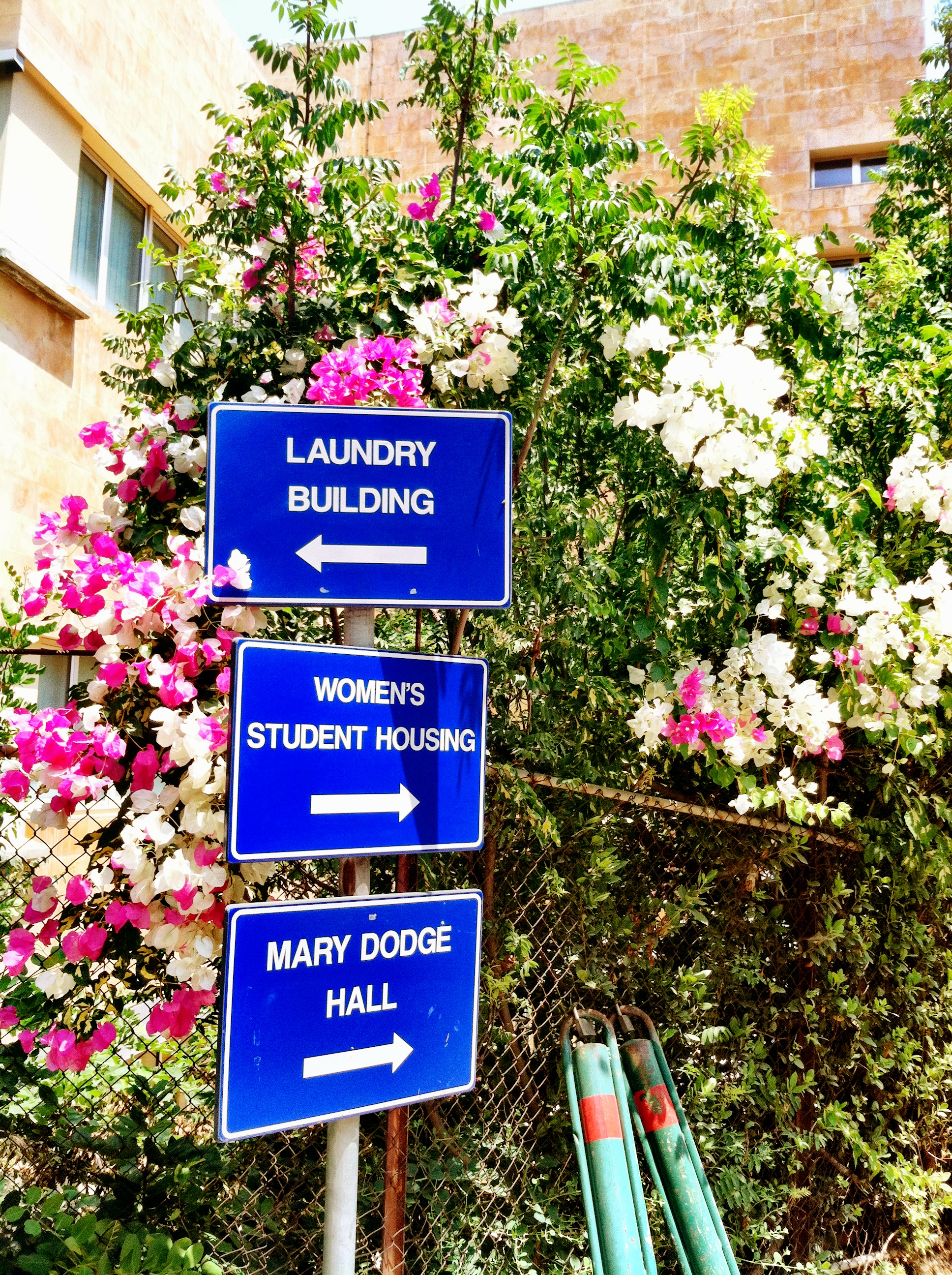
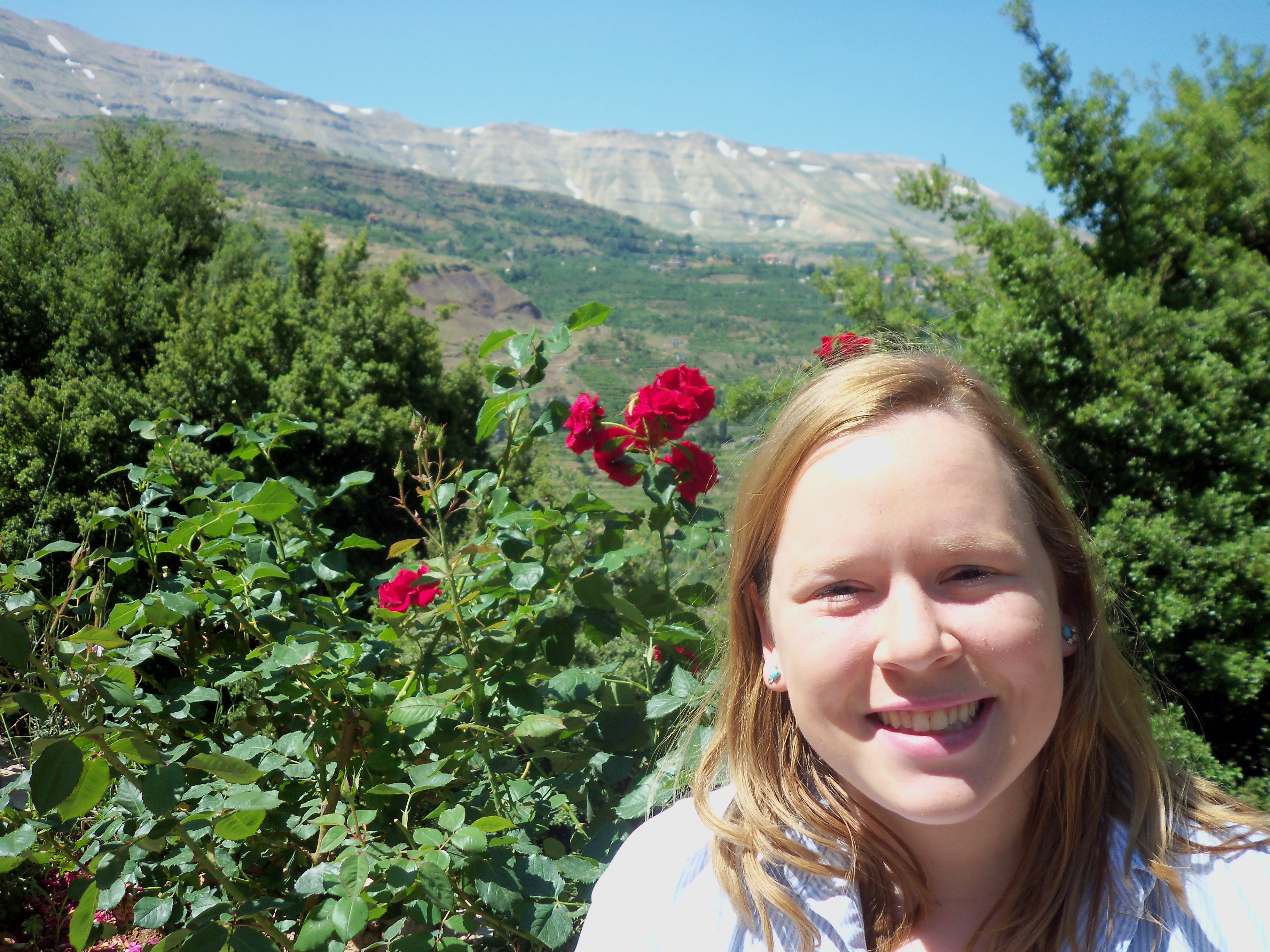
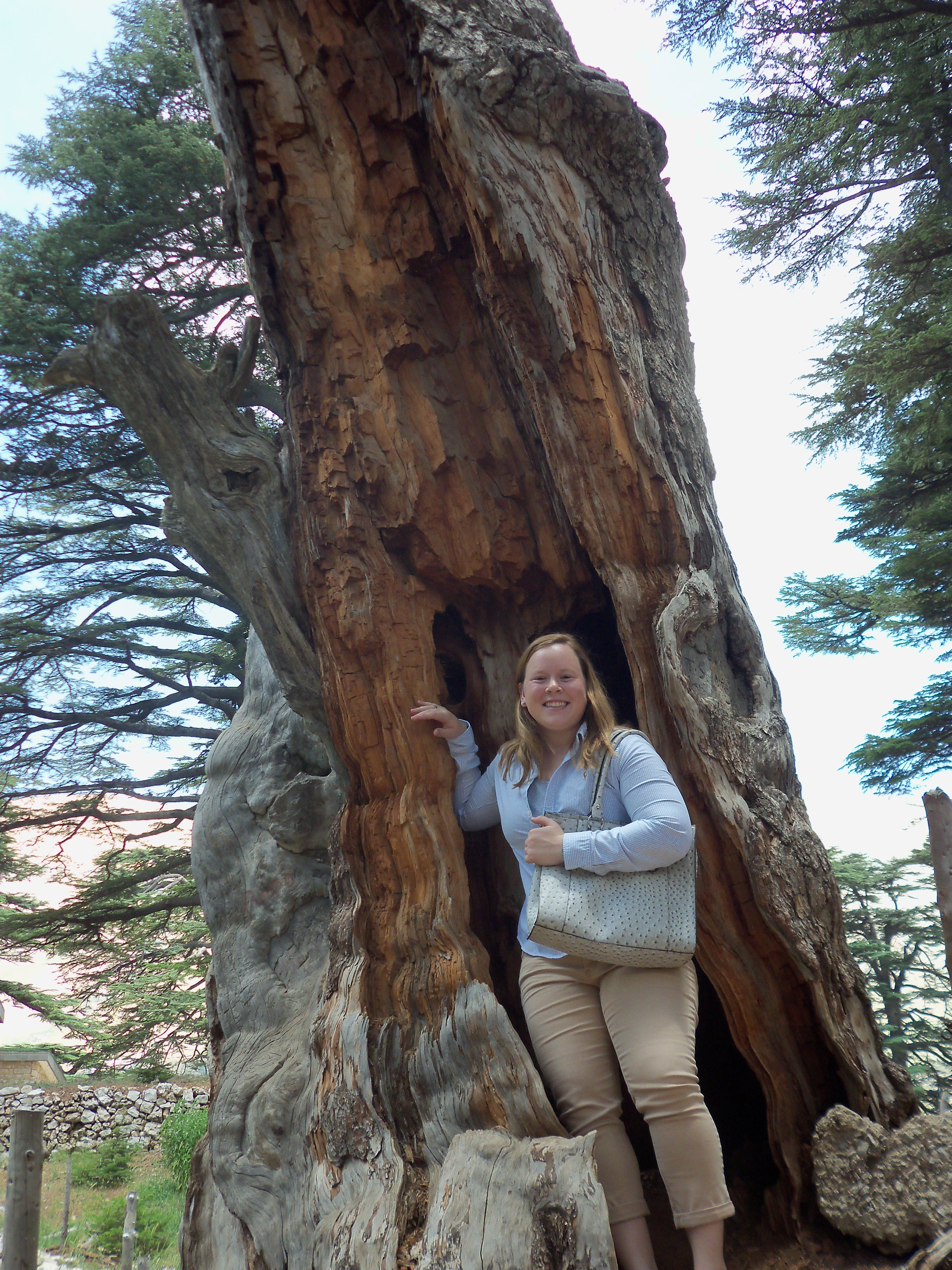
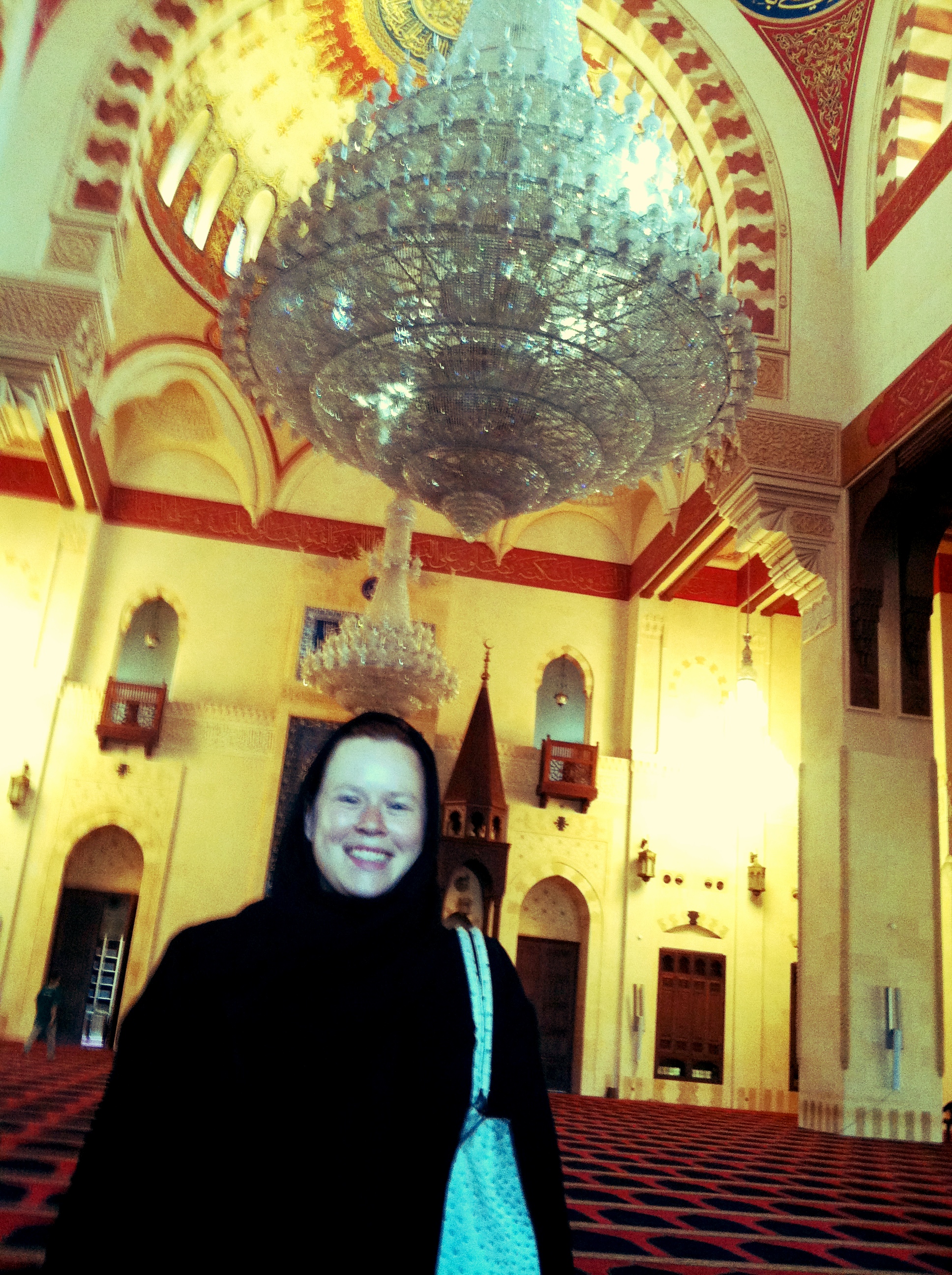
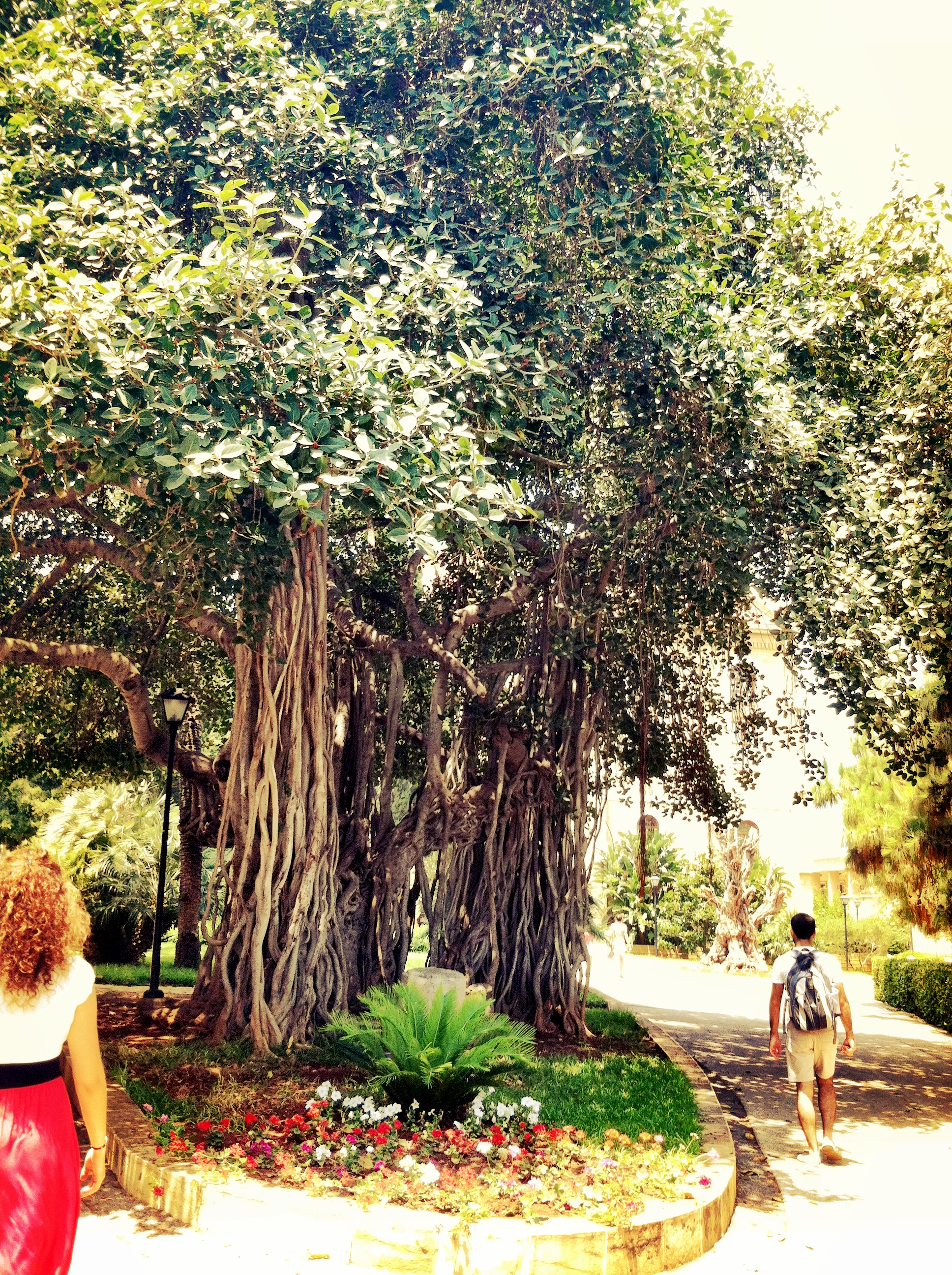
Oh in between our two meetings we had a tour of American University of Beirut’s campus. It’s very beautiful and just a minute walk from the beach. If I had longer than one year left in my undergrad I would love to study abroad there. Explanation of photos: 1. Graffiti in Beirut outside of Al-Majmoua office. 2. Me on AUB campus in front of main entrance. 3. Banyan tree on AUB Campus. 4. Pretty flowers on AUB campus. Well I think that’s enough for today! Peace and blessing 🙂

Day 4 – Our first meetings

Yesterday was our first day of meetings. We went to this super swanky office building where the Lebanon Renaissance Foundation has their offices. We met with four individuals:

  1. Michael Young who is an editor at Reason magazine and also an editor at the Daily Star. He has also written a book, which I am going to try and get when we return called “The Ghosts of Martyrs Square: An Eyewitness Account of Lebanon’s Life Struggles.”
  2. Hanin Ghaddar is the managing editor of Now Lebanon. She was very friendly and honest with her comments.
  3. Ousama Safa who is a Social Affairs officer at UN ESCWA. He also has experience with think tanks, lobbying and public policy.
  4. Lokman Slim is an activist trying to raise awareness about the collective amnesia regarding the Civil War. He co-founded Umam Documentation & Research and has helped publish several reports related to the Civil War.

All of the panelists were informative and interesting. We started off looking at the Arab Spring. One of the panelists shared that he believes there is a false sense of belief that things can happen in Lebanon as well post Arab Spring. The reality is that the Lebanese beast has multiple heads and so it is impossible to rally for one specific officials resignation or something similar because are so many issues at different levels.

The major topic on everyone’s minds right now is Syria. Syria has a very direct influence on events in Lebanon, therefore it is a question of how, not when, things might change in Lebanon.

Another topic which we discussed was the amnesia related to the Civil War. The Lebanese Civil War officially ended in 1990 with an official amnesty. It is called into question how the war ended and, more importantly, if it ended? It is surprising that a unified history book has not been decided on in Lebanon. There are three different history books depending on which region you live in. The panelists had different views regarding the issue of the textbook. Ousama believed that it was ridiculous that the country could not decide on one book and it should be remedied as soon as possible. However, Lokman, who spends a lot of time on the topic of the Civil War in his work, though that the textbook was irrelevant and advocated a curriculum based on all different perspectives. The attitude of many in Lebanon is that the war wasn’t their war, it was a “war of others.” All panelists agreed that the Lebanese need to take ownership of the war in order to truly move on.

A big issue in Lebanon is the sectarianism. All panelists agreed that the confessional system is flawed and needs revisions, however they did not all agree on what the revisions should be.

I was surprised by the panelists opinions towards the US and especially US foreign policy. One panelists commented that there is a huge vacuum left by US policy in the region. He wanted the US to show global leadership with diplomacy and use their musclepower to forced people into dialogue because the time for dialogue may be missed. With the shrinking space for dialogue and diplomacy, there is a growth of radicalism. One panelist seemed fearful that Obama would likely be stepping back from the Middle East if re-elected.


All around Lebanon

Today was super busy seeing lots of tourist things. This morning we went to the Khalil Gibran museum which was a two hour drive from Beirut. This was our first time to drive through the mountains. We were able to see the full extent of how beautiful Lebanon is. The museum was small and simple, but a great collection of Gibran’s artwork in his former home. Linda read us an excerpt from The Prophet while we were in the bus on the way to our next stop. She read one of my favorite sections which I had quoted on my Twitter about a week ago:

@laurakisthardt: Khalil Gibran on children: “You may give them your love, but not your thoughts, For they have their own thoughts.”

After the museum, we walked around the preserved Cedars. They were incredibly beautiful, but are unfortunately very over harvested. When you look from the top of the mountain the grove where we had walking among the cedars it was such a tiny section of land.

While on the bus to our next destination after the cedars, we stopped at the top of the mountain where there was snow and ice! Our group had a mini snowball fight. I also bought some nuts that a vendor was selling, several other people also bought a variety of nuts. We continued on our drive in the country, noting along the way Christian villages or Muslim villages. Since it was Sunday, many of the Christian villages were nearly impossible to drive through because of all the cars completely parked any which way in the streets.

Our next stop on the tour was the Roman ruins at Baalbek. I seriously can not express how amazing this place was! It truly looks the same as in Greece or Rome. There were originally three temples at Baalbek. One is still unrestored and buried in the ground. There are two temples to walk around in. The temple of Bacchus is the most complete Roman temple in the entire world. It is the only temple in the world to have any part of the ceiling remaining. It was all incredibly detailed and beautiful. The other temple which was more destroyed was to honor Jupiter. Even though it was not as intact as the other temple it was still incredible to imagine how grand it must have once been.

The reason that the these ruins are so well preserved in because the Muslims built fortresses around the temples. They used them as a defense against invaders and inadverntantly protected the Roman temples. Specifically the temple of Bacchus was later used as a dungeon and storehouse. When it was no longer in use it was just filled with dirt. For this reason, there is writing on the walls of the temple about 15 feet in the air from the 1800’s when the ground was at that level. It was truly an interesting sight to see!

After the wonderful tour of Baalbek, we went for an ice cream in Zahle. Zahle was a very cute little town with a nice river flowing through it. The section where we stopped for ice cream had a sort of mini-amusement park and arcade games. I tried the traditional ice cream covered in pistachios which was a fruit flavor that was very sweet and tasted creamy, but not like vanilla. Our guide did not remember the word for it in English and said he would look it up and get back to me.

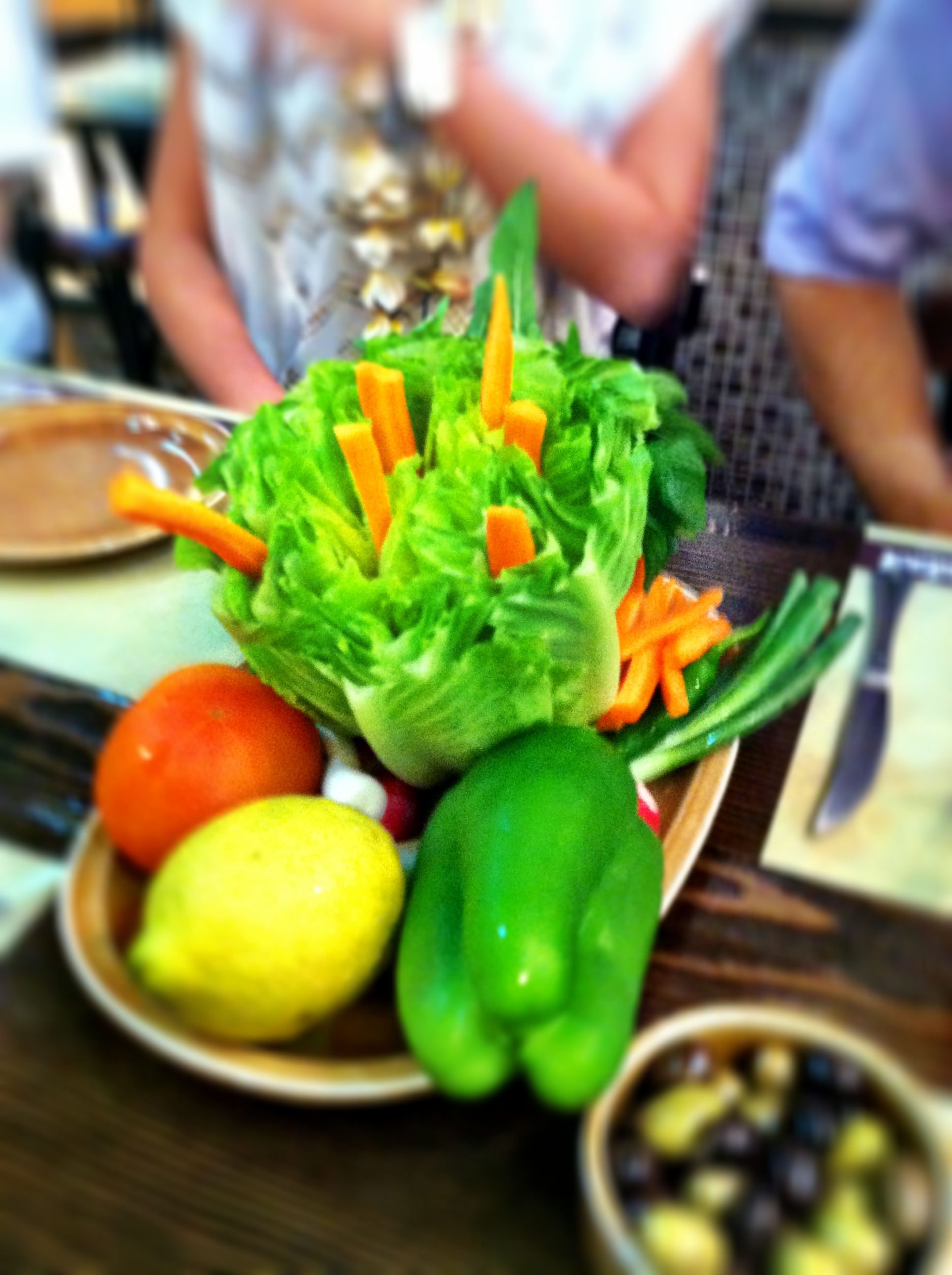
As if the day was not full enough, we came back to the hotel after the long drive back to Beirut for a quick rest and then change for dinner. We went to a traditional Lebanese restaurant for dinner. It was amazing! We tried so many different dishes. My personal favorites were stuffed grape leaves, a pizza that I could not describe at all, and simply the pita bread and olive oil. This was the best olive oil I’ve ever had in my life. The delicious meal made a great end to an amazing day all around Lebanon. We came back and reflected for a bit with the group at the hotel and then headed up for bed!

Details from Pre-departure

As promised I am going to go into more detail about the meetings that I had in DC at the National Council on June 21st.

From Dr. Anthony’s opening remarks, I was surprised by his comment that the Lebanese lack empathy. He believes this is why there is conflict in the area because people are not able to put themselves in the other person’s shoes. Obviously this is not true for everyone, but it seems to be one factor.

I learned that the Shia in Iran look up to the Shia in Lebanon. Also Saudi Arabia pushed for greater representation of Shia in Lebanon because of security and stability. Security and stability are the key terms of the day.

I can’t say enough how interesting Miriam’s presentation was on the Palestinian refugees in Lebanon. She has focused on getting past the generalities and looking at why the situation is the way it is. Personal and unique experiences are the also important to her in her research. There are approximately 455,000 registered refugees and 12 camps in Lebanon. However, not all refugees are registered. You are only allowed to be a registered refugee if you left pre-1948 or are a direct descendant of someone who did. I was surprised to learn that not all refugees have the same socio-economic status. Some never live in camps and are actually quite well off, although this is certainly a minority. Also Miriam pointed out that the stereotype is that all refugees are miserable in the camps and want to leave. According to Miriam most refugees have turned the camps into their homes and therefore are very attached to them.Naji Ali

The issue with the Palestinian refugees in Lebanon is that the balance between Christians and Muslims is so delicate. Giving citizenship to the 455,000 mainly Sunni Muslim Palestinian refugees would tip the scales in favor of the Muslims because the population of Lebanon is small, less than 4 million. Interestingly from 1950-1960 all of the Christian Palestinian refugees were naturalized, approximately 50,000 at the time. Then later in 1994 all of the Shia Muslim Palestinians were naturalized. However, the Sunni Muslims have been ignored all the time.

Another issue for the refugees is that they can not work in Lebanon for the most part. In 1961 the Law of Reciprocity became the primary labor law and it said that only citizens of countries with work exchanges with Lebanon are allowed to work here. However, the Palestinians have no country to make this sort of exchange with and therefore they are not allowed to work here.

Pre-Civil War, circa 1968-1982, the 1969 Cairo Agreement said that Palestinians can do whatever they want in the camps. The PLO created jobs and built up their militia. However, after the Civil War, everyone in Lebanon blamed everything on the Palestinians in order to recover from the war. This negative attitude towards refugees still exists today.

From 1991 to present has been the rise of the NGO. There are two types of NGO’s active in Lebanon: relief work and memory preservation. The major policy issue in Lebanon that is currently debated is that women can’t pass their citizenship/nationality to their children in Lebanon. I am very interested in this issue since my focus next year will be on women in the Middle East.

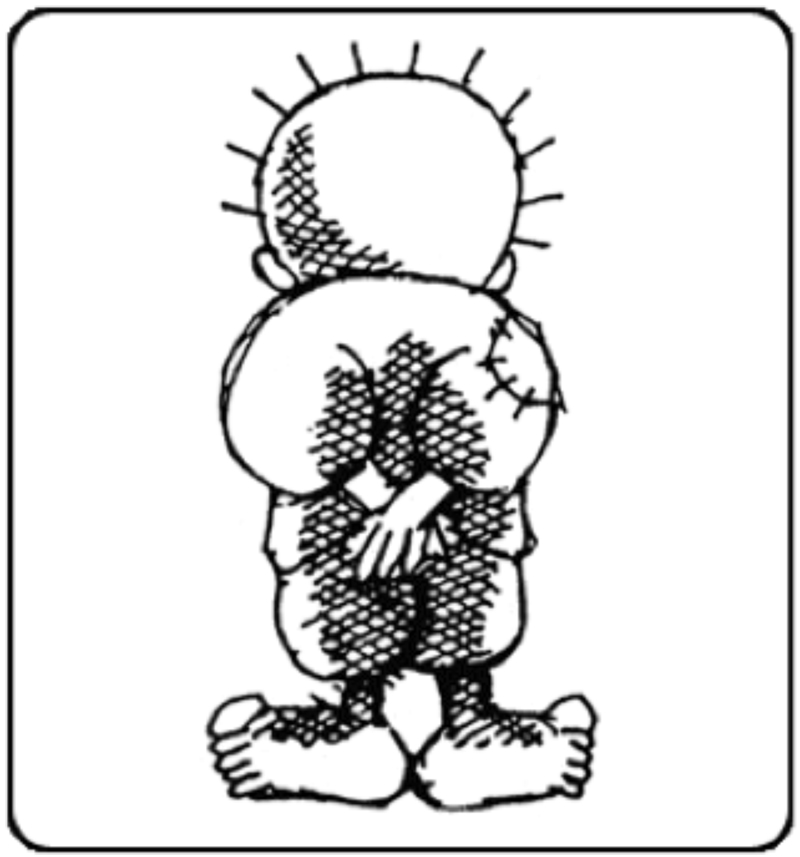
The cartoon is called Handala by Naji Ali. Miriam said that he represents the Palestinian refugee and you never see his face.

Walking Tour

The highlight of Saturday was a walking tour of Beirut. We went inside two churches and one mosque. I had never been in a mosque before. The men in our group were able to walk right in after taking off their shoes. The women however had to put on black smocks and cover our hair with black scarves, which were all provided by the mosque. We put our shoes in a cubby along the wall. There was a huge gorgeous chandelier in the mosque and several smaller ones too. The mosque cost $22 million and was completely paid for by Hariri before he was assassinated in 2005. Hariri is buried right next to the mosque and there is a tent with lots of photos of him on display. Rafic Hariri was Prime Minister of Lebanon 1992-1998 and 2000-2004. He is regarded as a hero in Lebanon for reviving the country and especially the city of Beirut after the civil war.

Some other random things to note:

I learned that Pepsi has the corner on the market in Lebanon. Coke usually has less than 20% of the market. I can’t remember when exactly Coke pulled out of Lebanon, but I’m guessing sometime around the civil war and then they came back later than Pepsi. Also Pepsi gives store owners more incentives to purchase with them, like a free case for every ten you buy.

Everyone in Beirut drinks bottled water instead of tap water. For this reason bottle water is very cheap. My roommate and I bought 6 large 1 liter bottles of water for $3.

Also everywhere takes US dollars and the exchange rate is accepted to be $1 US for 1500 Lebanese in all small shops.

I’ve been surprised by how much French is spoken. But this has been a plus for me! I’ve used a little Arabic so far, but I know more French so I’m able to use that too.

Tonight we are going to a music festival so I’m going to get some rest before we go to dinner at 9PM! Tomorrow will be a long day too so I may not update for a while.

Safe Arrival

I’ve arrived safely in Beirut. Overall the travel experience was great. Turkish Airlines was awesome! The few previous international flights I’ve been on were on US based airlines and were not as great. The flight from DC to Istanbul was spacious, had great food and amazingly there were no screaming children. Also there was free wine!

The hotel is nice and better than expected based on the reviews I had read on TripAdvisor. Here’ s a link to the hotel (trust me it’s better in person!): http://www.hotelalexandre.com

Today we had an orientation with the Lebanon Renaissance Foundation and met Sabine, Melkar and Fadi. We’re going for lunch now and a walking/bus tour this afternoon.

I promise more updates later tonight!

Oreos with the Ambassador

My first update! I’ll be boarding my flight momentarily, but I wanted to tell you all about my crazy day.

We started off with a chat with Dr. Anthony the founding President of the National Council on US-Arab Relations (referred to as National Council or the Council for short). He is a brilliant man who we were lucky to meet and spend a great deal of our time with.

Our first presentation was from Miriam who is a relatively new employee at the National Council. She is a Lebanese Canadian who is doing her research on the Palestinian refugees in Lebanon. I learned so much from her presentation and it created lots of further points for research.

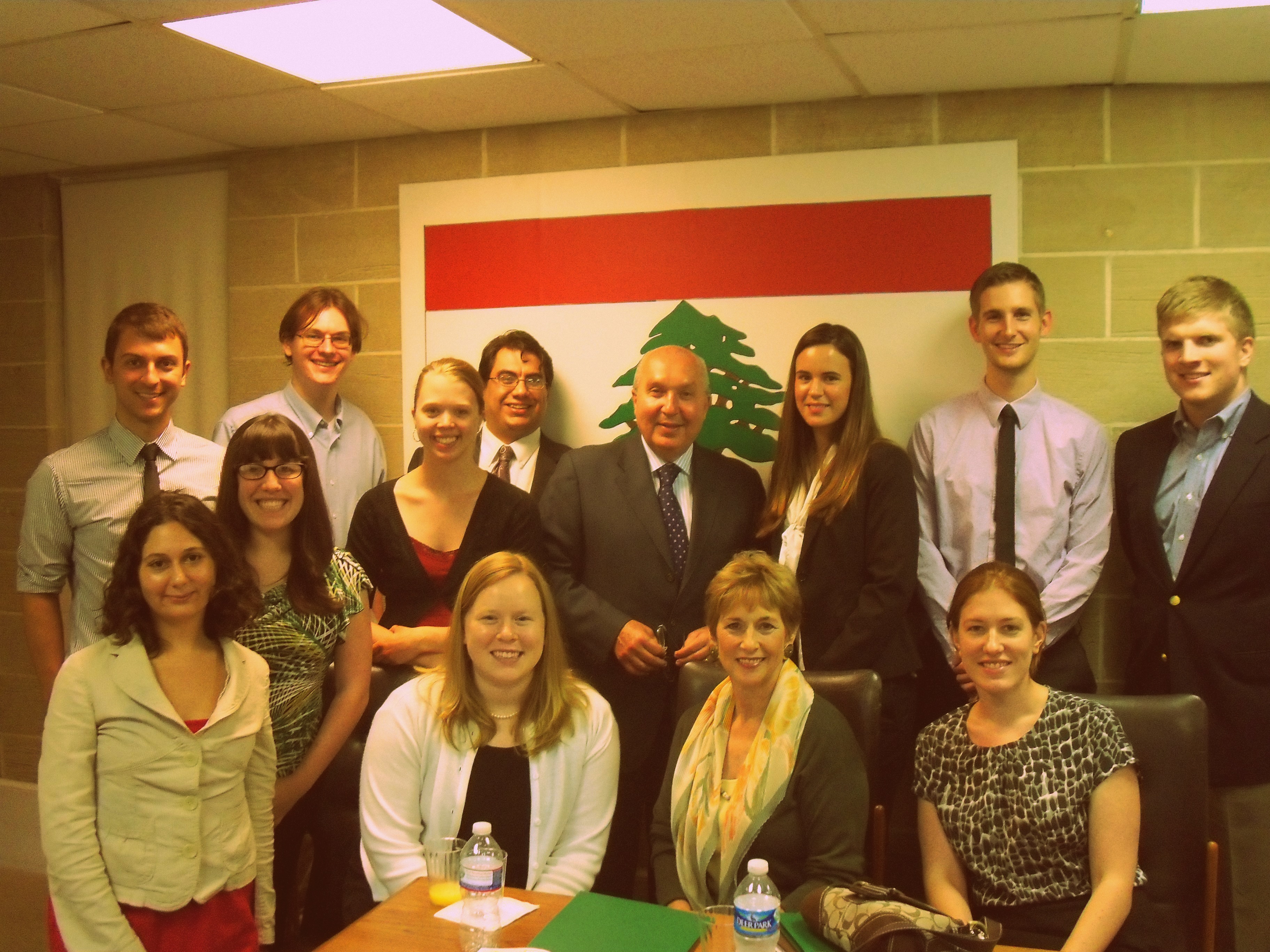
Next we went to the Lebanese Embassy. Yes we ate Oreos with the Ambassador! Here’s the photo from our visit:

After the Ambassador we met with several other scholars and prominent thinkers of the Middle East. Due to security reasons, we are not allowed to share the names/titles/employers of all those we met with (no joke!). But every session was very informative and generated lively discussions.

Several unscheduled highlights of the day:

  1. Attempting to hail a cab outside the National Press Building and two huge black SUV’s pull up. Security guys in suits step out, followed by Leon Panetta! We got a smile and wave from the Secretary of Defense!
  2. While waiting in line to go through TSA in Dulles, our study visit leader saw Ambassador Cook, former ambassador to Oman. We were introduced to her as well!

All together a busy and exciting day. I’ll try and post again later with some more detailed comments based on the tons of notes I took from all the sessions today.